Communication for transformative change
Transformative change requires a different kind of communication. It cannot rely on traditional one-way messaging because the change we seek is a profound shift in systems -addressing inequalities, reconnecting with nature, and rebalancing power. Communication must support social and adaptive learning, create dialogue, and build collective movements rather than simply spreading information.
What you will achieve with this action?
Design communication as an ongoing cycle that connects people, influences structures, and supports learning.
Get inspired by: Land Van Ons, The Netherlands
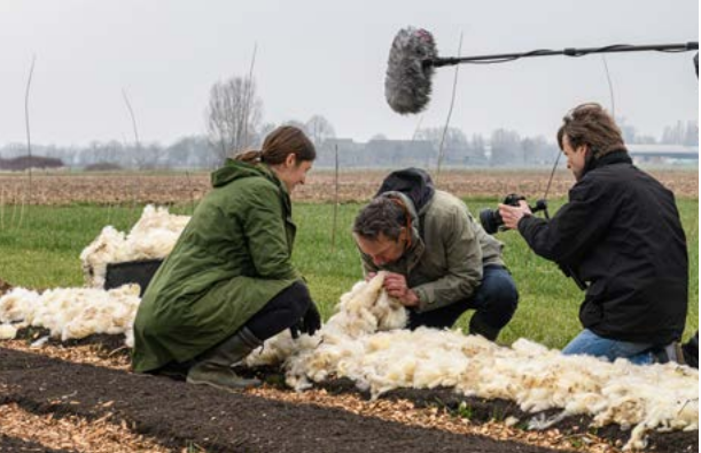
According to Engbersen et al. (2024), Land Vans Ons is an initiative aimed at increasing biodiversity and restoring the rural landscape in the Netherlands. By purchasing agricultural plots through memberships, they ensure farmers can rent them to make a living while stewarding the land, restoring biodiversity and the landscape. Their communication is strategic, multi-channel and cyclical, focused on visibility, legitimacy and movement building. Combining research-driven campaigns with storytelling and events. The organisation was frequently cited in the media, policy reports, and academic publications, and was monitored by prominent academic and political figures. They also focused on visibility, winning the Duurazame Dertig Public Awards and maintaining their position in Trouw's Duurazame Top 100. Besides communicating what they do, they do by communicating. Therefore, as their work is based on membership, they launched a successful end-of-year campaign in which "members-recruit members" resulted in the expansion of their movement.
Explore how to take action
Remember, this is an inspiration guide (not a recipe) to help you decide what will be most transformative for your context. Every context is unique!
With whom and for whom are you transforming?
Are we just informing people about what we do, or are we creating spaces for interaction and co-creation?
Communication for transformative change is about building relationships and movements, not just sending messages. By transforming one-directional, linear communication structures into a cyclical, adaptive approach, communication becomes a key pillar of transformation: empowering diverse voices, fostering trust, and enabling collective action. When communication is embedded as a continuous, participatory process, it strengthens the capacity of institutions and communities to adapt and work towards a future where nature and communities that have been excluded from voicing the futures they desire are heard and involved.
References
"Engbersen, D., Biesbroek, R., & Termeer, C. J. (2024). Between theory and action: Assessing the transformative character of climate change adaptation in 51 cases in the Netherlands. Global Environmental Change, 89, 102948. https://doi.org/10.1016/j.gloenvcha.2024.102948
https://landvanons.nl/jaarverslag/
Paul Beerten & Piet Levering. (n.d.). Land van Ons - Annual Report 2023 (A. Koop, J. Everaars, H. Verschuren, & F. Schrameijer, Eds.). https://landvanons.nl/wp-content/uploads/2024/04/LvO-2024-Jaarverslag-2023-07.pdf?utm_source=chatgpt.com
Paul Beerten & Piet Levering. (n.d.). Land van Ons - Annual Report 2023 (A. Koop, J. Everaars, H. Verschuren, & F. Schrameijer, Eds.). https://landvanons.nl/wp-content/uploads/2024/04/LvO-2024-Jaarverslag-2023-07.pdf?utm_source=chatgpt.com