Reconnect finance with nature
Reflecting on how we understand nature matters because it helps us see financial decisions as part of broader social-ecological systems rather than separate from them. This shift in perspective can open space to question the metrics we commonly use and to notice how financial flows also shape ecological outcomes.
What you will achieve with this action?
Design a roadmap to integrate an embedded socio-ecological perspective into financial decision-making to rethink financial risks and responsibilities associated with nature-degradation
Get inspired by: The Green Finance Institute in the UK
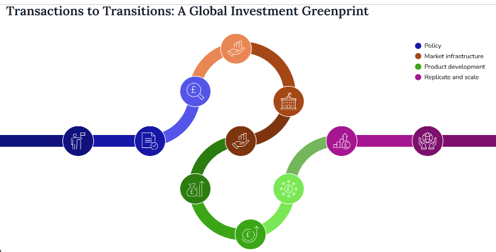
Picture taken from: https://hive.greenfinanceinstitute.com/gfihive/assessing-the-materiality-of-nature-related-financial-risks-for-the-uk/
The Green Finance Institute has used a similar approach to estimate the UK financial sector's exposure to nature-related financial risk.
See report here: https://hive.greenfinanceinstitute.com/gfihive/assessing-the-materiality-of-nature-related-financial-risks-for-the-uk
Explore how to take action
Remember, this is an inspiration guide (not a recipe) to help you decide what will be most transformative for your context. Every context is unique!
With whom and for whom are you transforming?
What might a financial system that is genuinely aligned with ecological realities look like, and what role could it play in society?
This tool invites you to see finance as part of a wider social-ecological system -one in which financial decisions both depend on and shape the living world.
By recognising these interdependencies, you can help structure the process in your context to steer capital toward choices that respect ecological limits and support long-term societal wellbeing.
As you experiment with new approaches, stay attentive to complexity and unintended consequences: in dynamic systems, even well-intended actions can create new risks. Use this tool not as a linear solution, but as a guide for learning, adaptation, and more responsible financial practice.
References
Dingkuhn, P. Nel, J. Schoenmaker, D & Alpizar, F. (2025). A Transformative Approach to Sustainable Finance: Systems Thinking and Paradigm Shift. (Under review).