Meet the TRANSPATH Voices at the Transformative Change for Biodiversity Conference
With just days to go until the Transformative Change for Biodiversity (TC4B) conference opens in Brussels on 4–5 June 2026, we want to introduce the TRANSPATH researchers who will be taking the stage and sharing years of fieldwork, modeling, and policy analysis with 150 participants from across Europe and beyond.
TRANSPATH is one of nine Horizon Europe projects co-organising this event at Comet Louise, Place Stéphanie 20, Brussels. Across both days, our team contributes to six sessions spanning trade policy, governance leverage points, biodiversity finance, societal values, and real-world case studies from Ghana to Eastern Europe. Here is what to look out for.
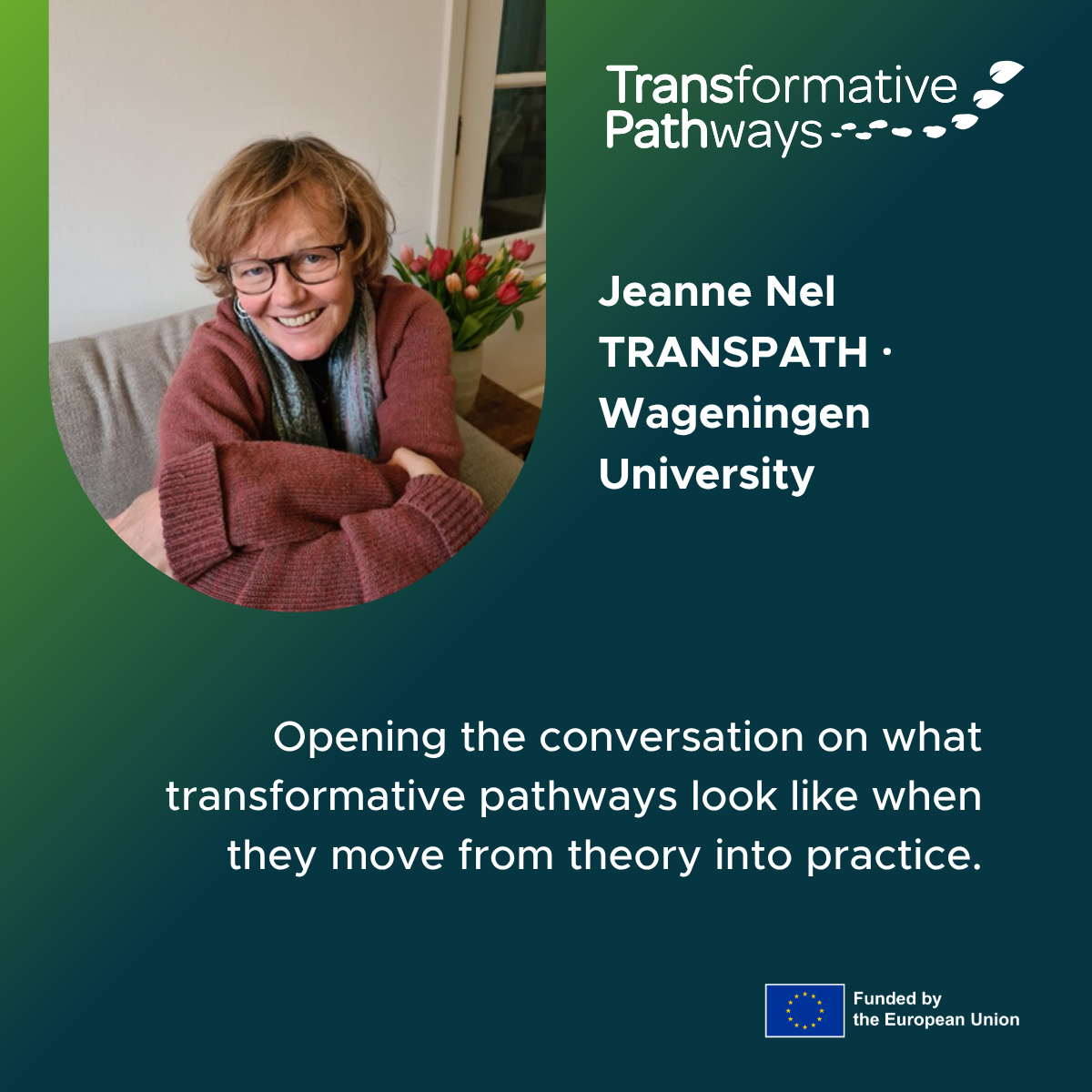
Jeanne Nel, Opening the conversation on transformative change
Day 1 | Opening Plenary (09:00)
 |
|
TRANSPATH's scientific coordinator, Jeanne Nel, opens TRANSPATH's presence at the conference with a soapbox address in the Opening Plenary, where each of the nine projects presents its core contribution to the field.
Jeanne's work with TRANSPATH focuses on how transformative pathways can be enabled across diverse governance and institutional contexts, and what it takes to move from research insight to real-world impact.
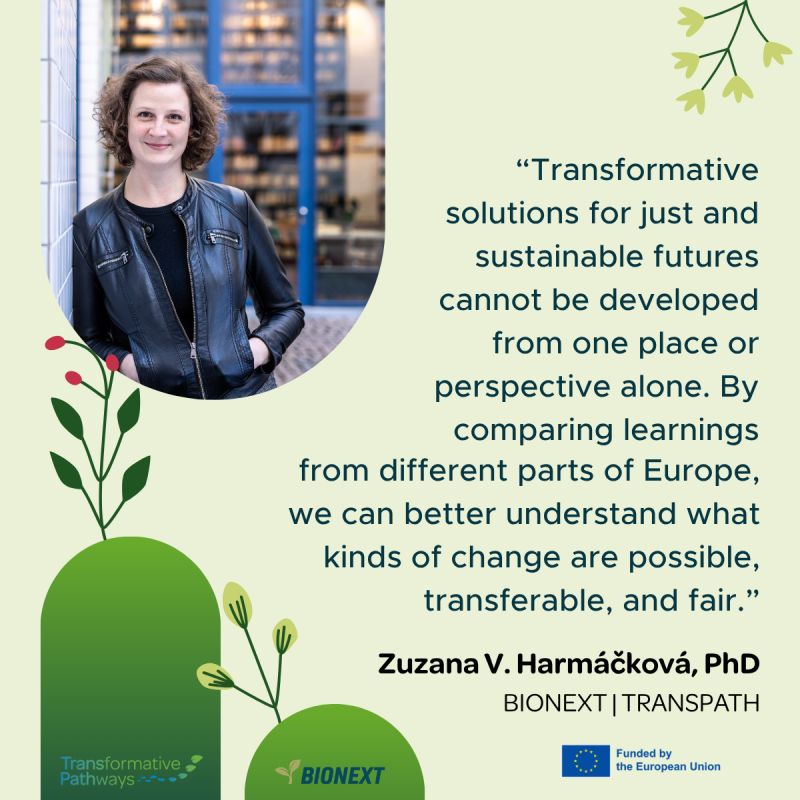
Zuzana Harmáčková, Enablers and disablers of change across Europe
Day 1 | Track B Block 3 (15:15–16:45) — lead moderator
 |
|
Zuzana Harmáčková leads one of the conference's most distinctive sessions: an interactive pathways workshop examining the behavioural, institutional, and governance levers for transformative change, with a specific focus on the contrasts and similarities between Eastern and Western Europe.
Working alongside Pavlína Schultzová, Zuzana will present TRANSPATH's key findings on the enablers and disablers of transformative change and facilitate a live Mentimeter discussion on what these differences mean for EU-level policymaking. The session brings together participants from TRANSPATH, Planet4B, DAISY, and BIOTraCes, making it one of the most cross-project sessions of the entire conference.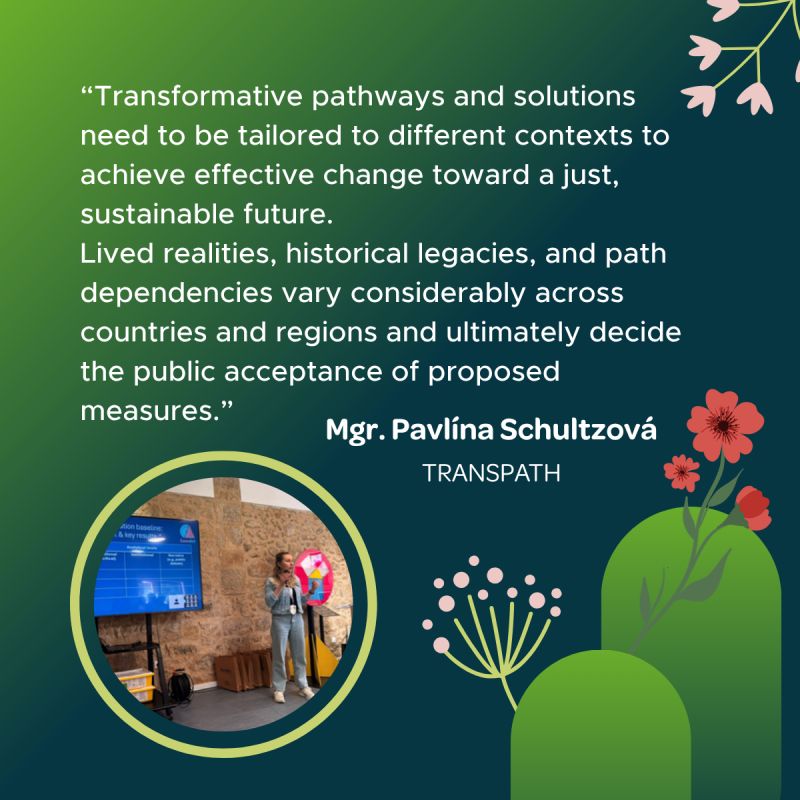
Zuzana's research sits at the intersection of sustainability science, futures thinking, and social-ecological systems, exploring how context shapes the possibility space for transformative change.
Francisco Alpizar, When trade policy has unintended consequences
Day 1 | Track A Block 1 (11:45–12:00) · Day 2 Track B (co-moderator)
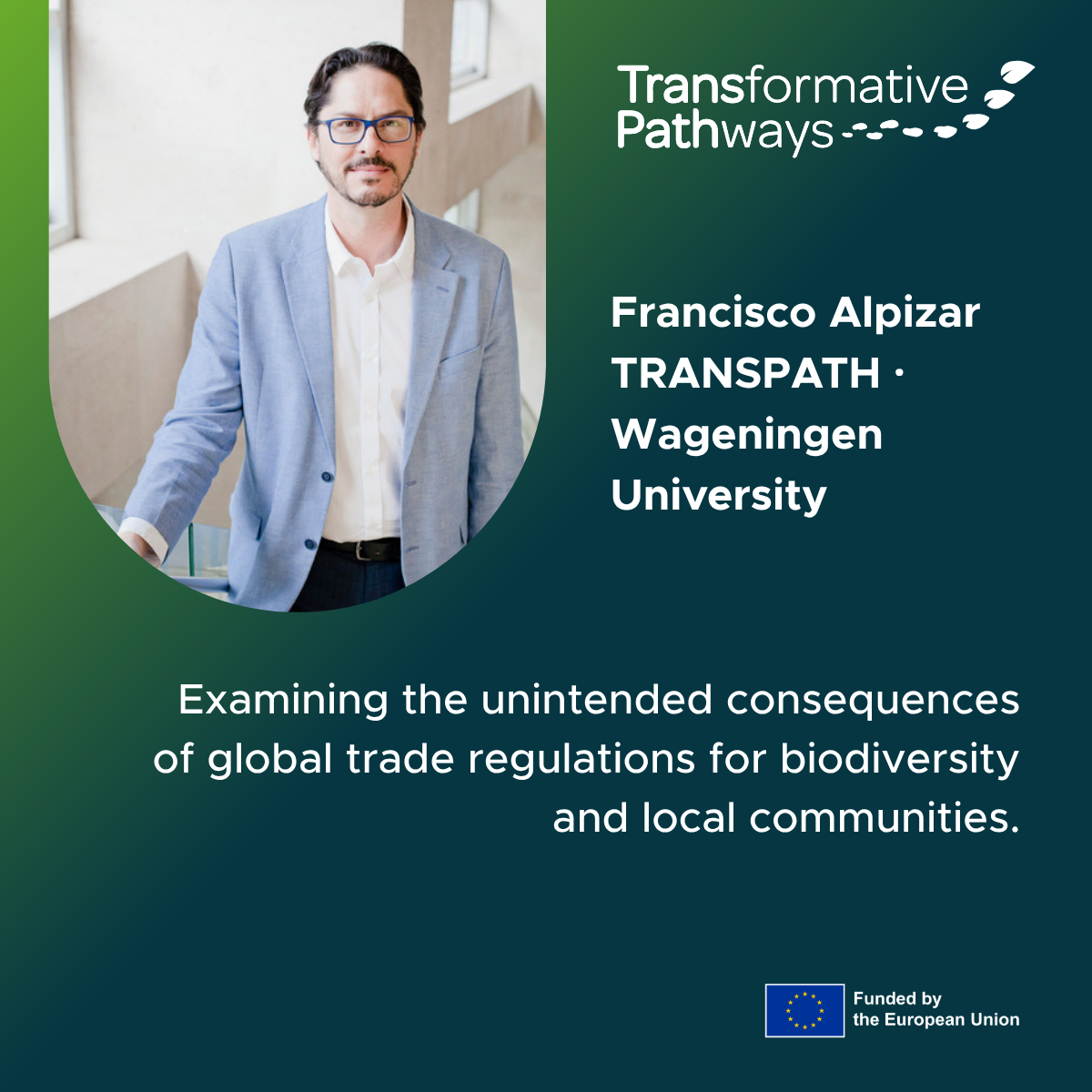
Francisco Alpizar presents TRANSPATH research on the unintended consequences of global trade regulations for biodiversity, a timely and politically charged topic as the EU debates deforestation regulations, supply chain due diligence, and green trade mechanisms.
His presentation in Track A Block 1 examines how well-intentioned trade policy can produce unexpected outcomes for nature and for communities in producer countries, drawing on TRANSPATH's work across global value chains. On Day 2, Francisco co-moderates Track B on financing biodiversity transformations, a session that brings together researchers, a Raiffeisen Bank International representative, and financial sector practitioners to discuss how money can flow toward nature-positive outcomes.
Paul Dingkuhn, Transforming the financial system for biodiversity
Day 2 | Track B Block 4 (10:25–10:40)
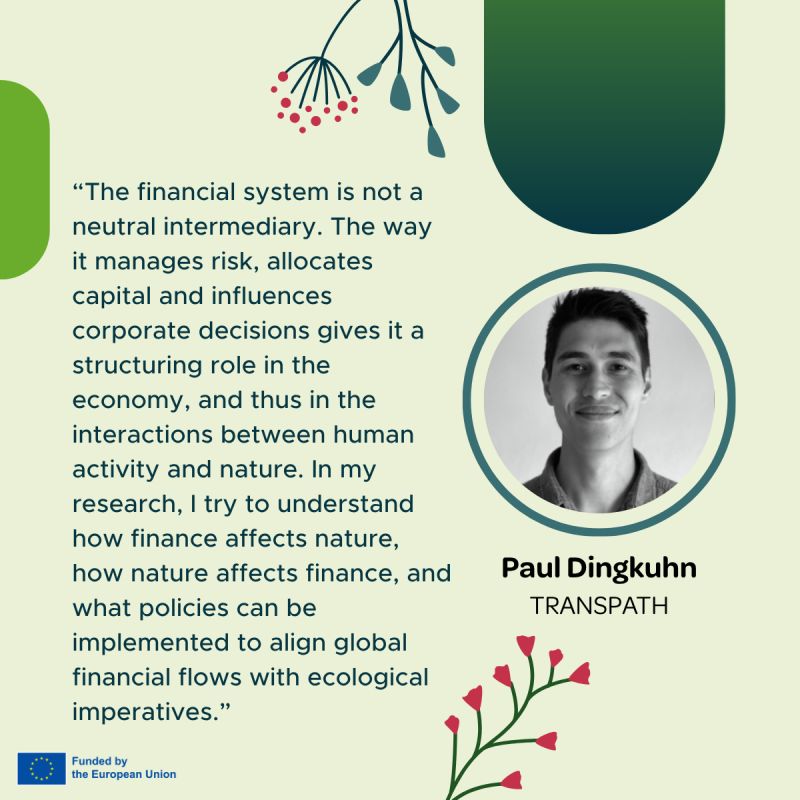
Paul Dingkuhn presents TRANSPATH's analysis of policies needed to transform the financial system in ways that support biodiversity. His slot sits within the Day 2 financing session alongside contributions on nature intelligence for biodiversity finance (Stockholm Environment Institute) and a panel featuring voices from the banking and consultancy sectors.
This session is one of the most practically oriented of the conference, and Paul's contribution bridges the gap between macro-level policy levers and the institutional changes needed to redirect financial flows toward nature-positive outcomes.
Sylvia Karlsson-Vinkhuyzen, Values, visions, and the science-policy interface
Day 1 | Track C Block 3 (values, visions & equity) · Day 2 Track A Block 4 (10:05–10:15)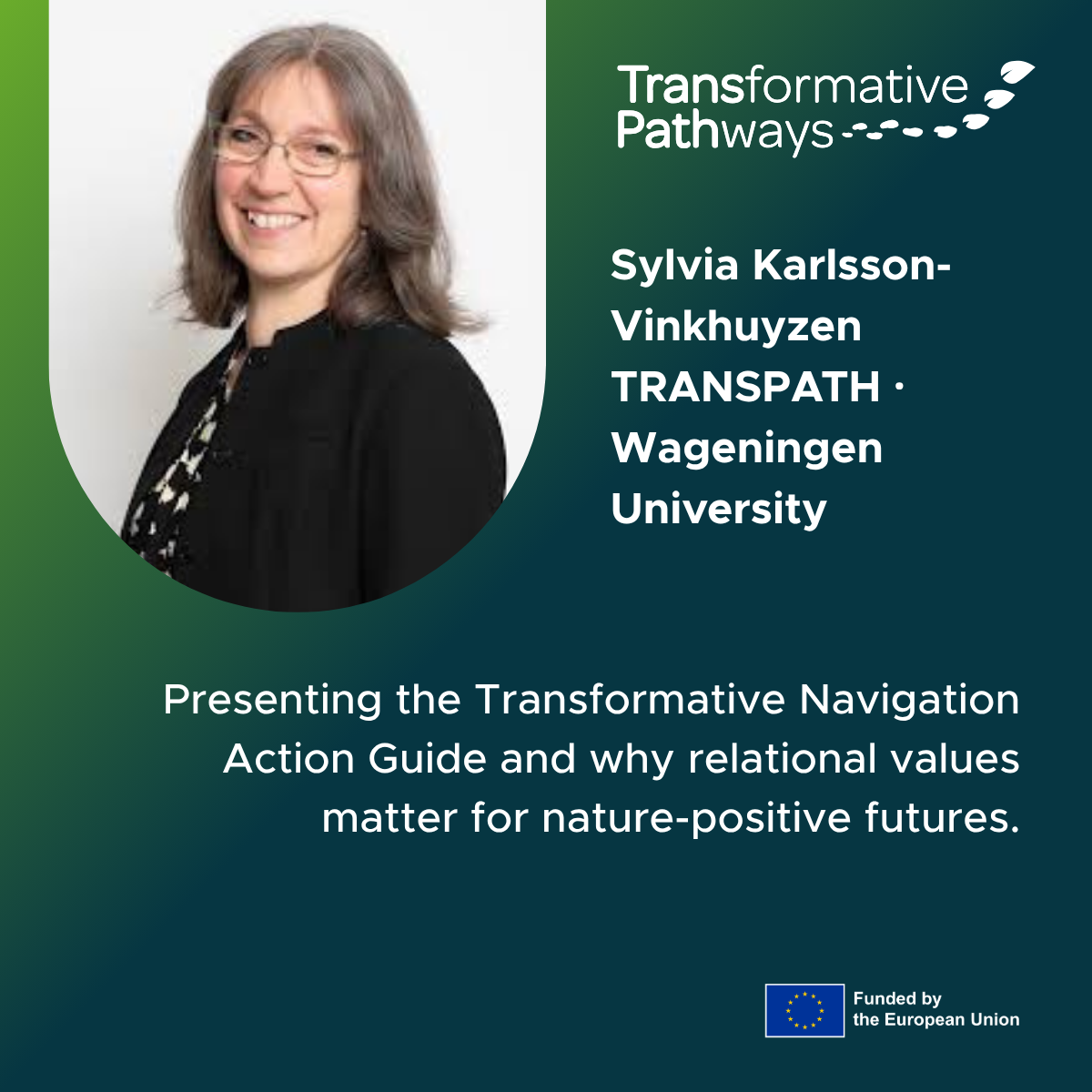
Sylvia Karlsson-Vinkhuyzen appears twice across the two days. On Day 1 she contributes to the Values, Visions & Equity session in Track C, presenting TRANSPATH research on relational values of nature and what these mean for our visions of a nature-positive future a contribution that connects directly to the growing policy interest in moving beyond purely economic framings of biodiversity.
On Day 2 she presents the Transformative Navigation Action Guide one of TRANSPATH's key practical deliverables in the session on integrating transformative knowledge into decision-making. This guide is designed for researchers and bridging agents navigating the complex terrain between scientific evidence and policy change.
David Tàbara, Shifting societal views toward regenerative sustainability
Day 1 | Track C Block 3 (15:15–16:45)
David Tàbara presents TRANSPATH's work on shifting societal views and values toward regenerative sustainability, offering a procedural approach to understanding how deep cultural change happens and how it can be facilitated. His contribution sits in the Values, Visions & Equity session alongside research on gender equity, justice, and the role of relational values in shaping nature-positive futures.
David's perspective draws on decades of research into sustainability transitions and the science-policy-society interface, and his TRANSPATH work focuses on identifying the cultural and psychological leverage points that underpin transformative change.
Utsoree Das, Tracing cocoa from Ghana to Europe
Day 1 | Track C Block 2 (13:20–13:30)
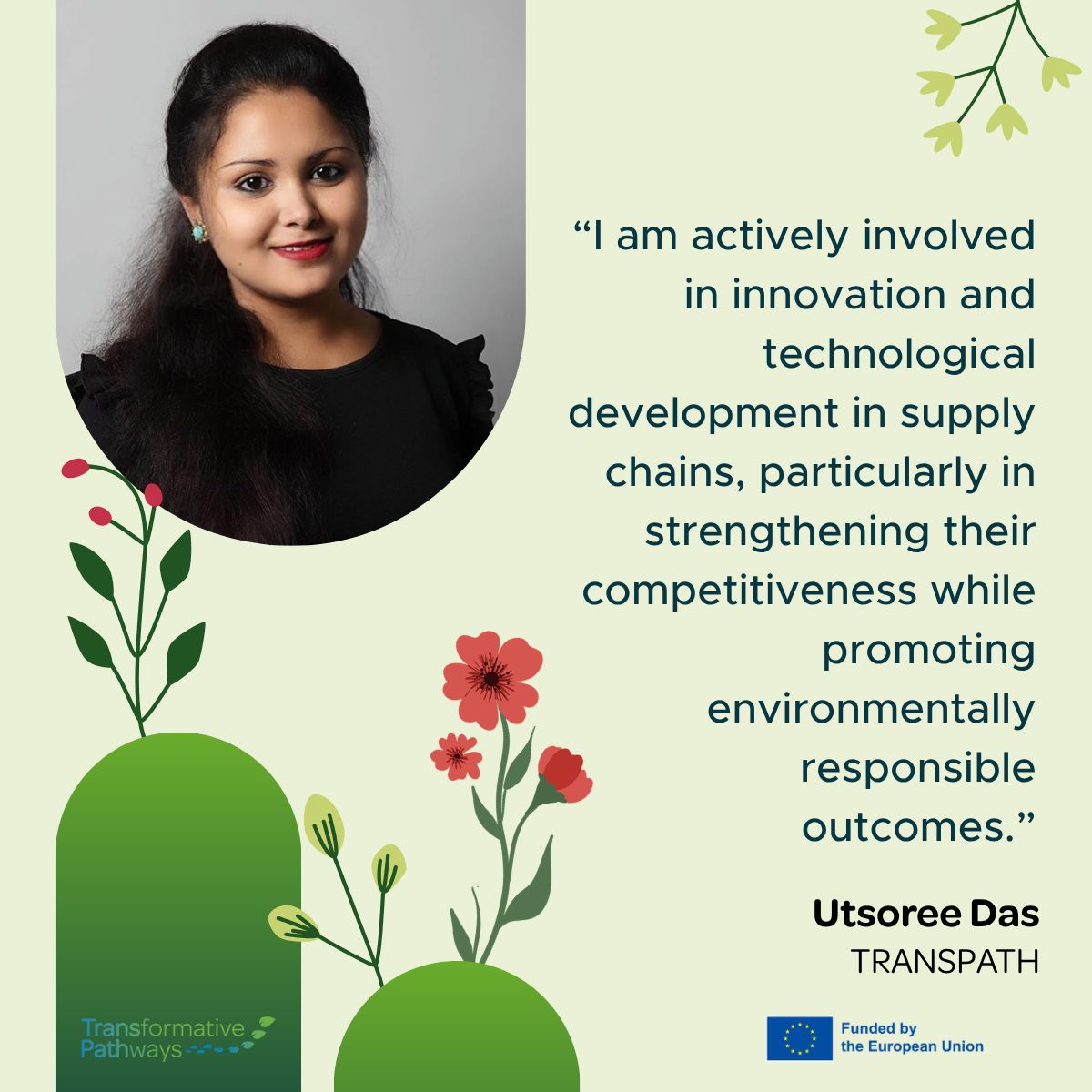
Utsoree Das presents one of TRANSPATH's most compelling field research outputs: a case study on digital traceability for deforestation-free supply chains in cocoa production in Ghana. Drawing on two research visits to the Nkawie district in Ashanti, her work examines how traceability tools can connect every cocoa bean back to its farm and what this means for biodiversity outcomes and farmer livelihoods.
Her presentation fits into the real-world case studies session alongside contributions on Finnish dairy, Peruvian anchoveta fisheries, Tanzanian cotton, and global commodity value chains making it one of the richest empirical sessions of the conference.
If you have missed your chance to register, you can always follow the live updates on the LinkedIn profiles of TRANSPATH and the Transformative Change for Biodiversity Cluster
---
*TRANSPATH receives funding from the European Union's Horizon Europe research and innovation programme under grant agreement No. 101081984.*