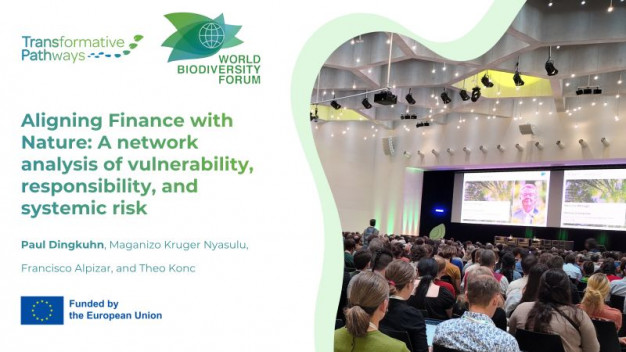
TRANSPATH at the World Biodiversity Forum 2026: Aligning finance with nature
TRANSPATH was at the World Biodiversity Forum this year, with the project's Paul Dingkuhn presenting new research on how financial systems connect to biodiversity risk.
The fourth edition of the World Biodiversity Forum (WBF2026) took place from 14–19 June 2026 in Davos, Switzerland, under the theme "Leading Transformation Together." Organised by the University of Zurich, the forum brought together more than 1,000 researchers, practitioners, policymakers, and civil society representatives from around the world to explore actionable solutions to biodiversity loss.
TRANSPATH's involvement
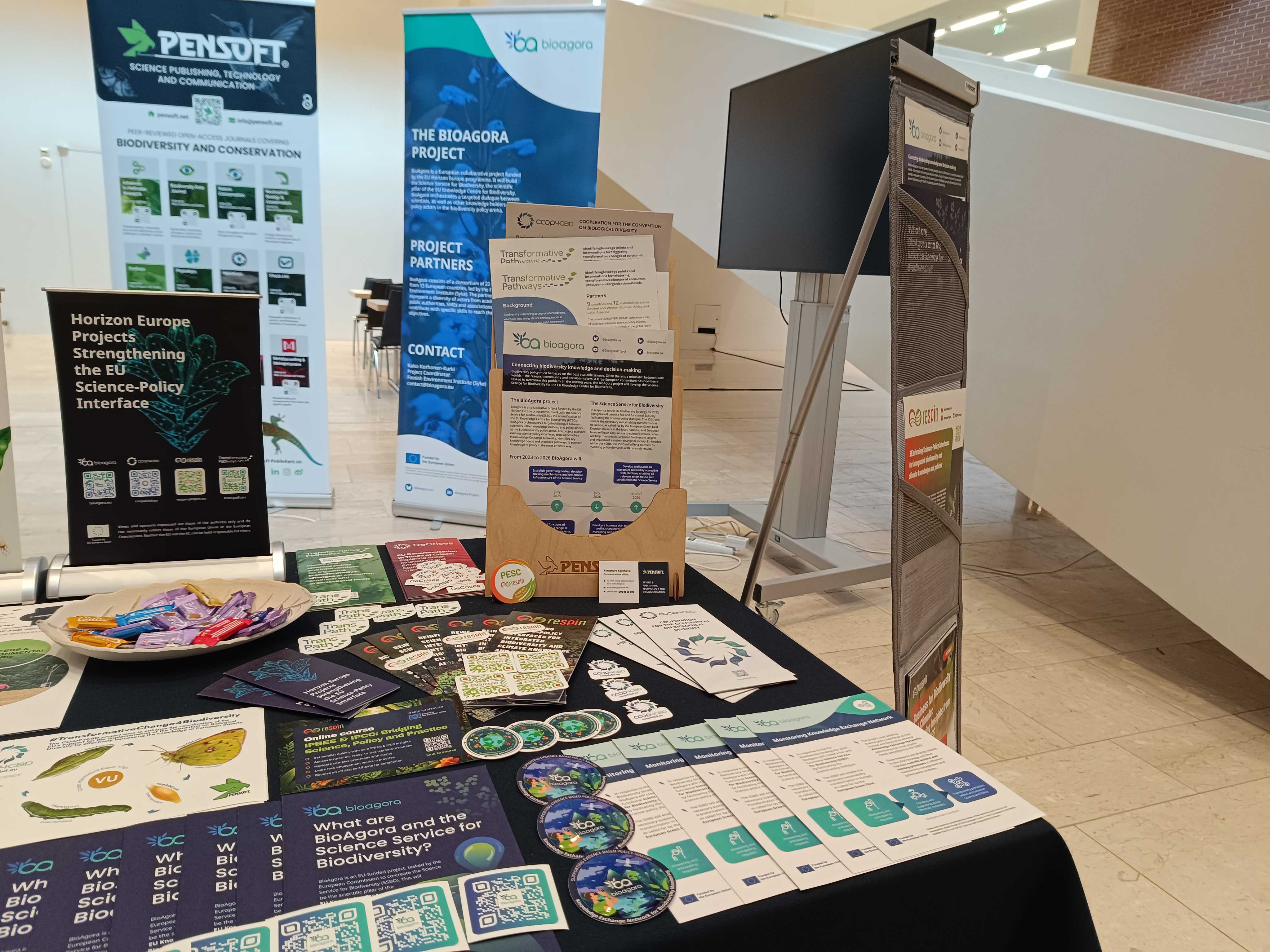
Besides having TRANSPATH materials at the Pensoft Publishers stand, spotted alongside other transformative change projects, BioAgora Project, RESPIN and CO-OP4CBD, TRANSPATH held a session on "Aligning Finance with Nature: A network analysis of vulnerability, responsibility, and systemic risk."
During this session, Paul Dingkuhn talked about a simple but important idea: when biodiversity is lost, it creates risks that spread through the whole global financial system. Until now, research has mainly focused on risks for individual companies, and less on the global picture.
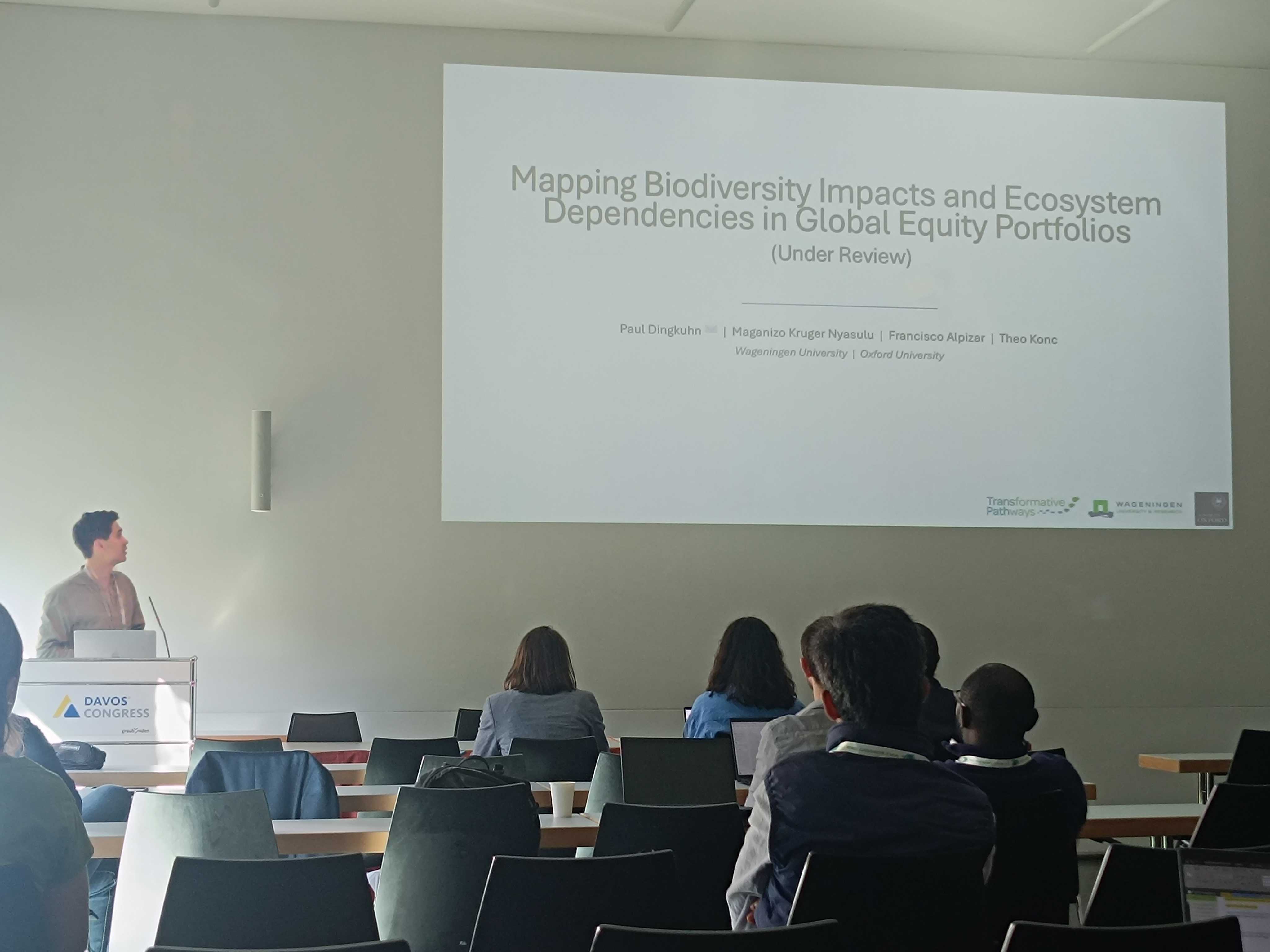
To study this, the team built a model connecting three types of data: nature, industry, and finance. This model includes:
- Public companies worth about USD 122.7 trillion in total (around 97% of all public companies in the world), plus their smaller, non-public subsidiaries about 200,000 companies in total
- About 400,000 major shareholders (the people and organizations who own these companies), who together own about USD 55 trillion worth of shares (around 44% of the world's total)
The researchers used several methods: network analysis (studying how things are connected), input-output modeling (tracking how resources move through the economy), and lifecycle assessment (measuring environmental impact from start to finish) to calculate how biodiversity is affected in specific places. They looked at four types of environmental pressure: land use, fresh water use, greenhouse gas emissions, and soil acidification. They also mapped how industries depend on 21 different services that nature provides (called "ecosystem services").
The research has three main goals:
- Find which financial institutions are the most important to the system's stability
- Identify key natural areas where damage could cause serious financial problems
- Show how risk and responsibility for these problems are not shared equally between countries and institutions
Why it matters
The findings are directly relevant to policy: by locating the critical nodes in this finance-nature network, the analysis can help target interventions that strengthen financial stability while supporting conservation and clarify where responsibility for systemic biodiversity impacts actually sits. It also lays groundwork for integrating biodiversity into disclosure practices, portfolio alignment, and risk assessment methodologies.
This analysis is ongoing, with next steps extending the framework into operational macro-risk assessment simulating local ecological shocks, modeling how risk propagates through the network, and deriving systemic-risk indicators under different ecological and economic scenarios. Stay tuned for the announcement of this upcoming paper.
Another notable mention
TRANSPATH also had a second presence at WBF2026: an action guide poster presented by Sylvia Karlsson-Vinkhuyzen, who leads TRANSPATH's work on developing a conceptual framework and methodological support for navigating transformative pathways in research and policy/practice.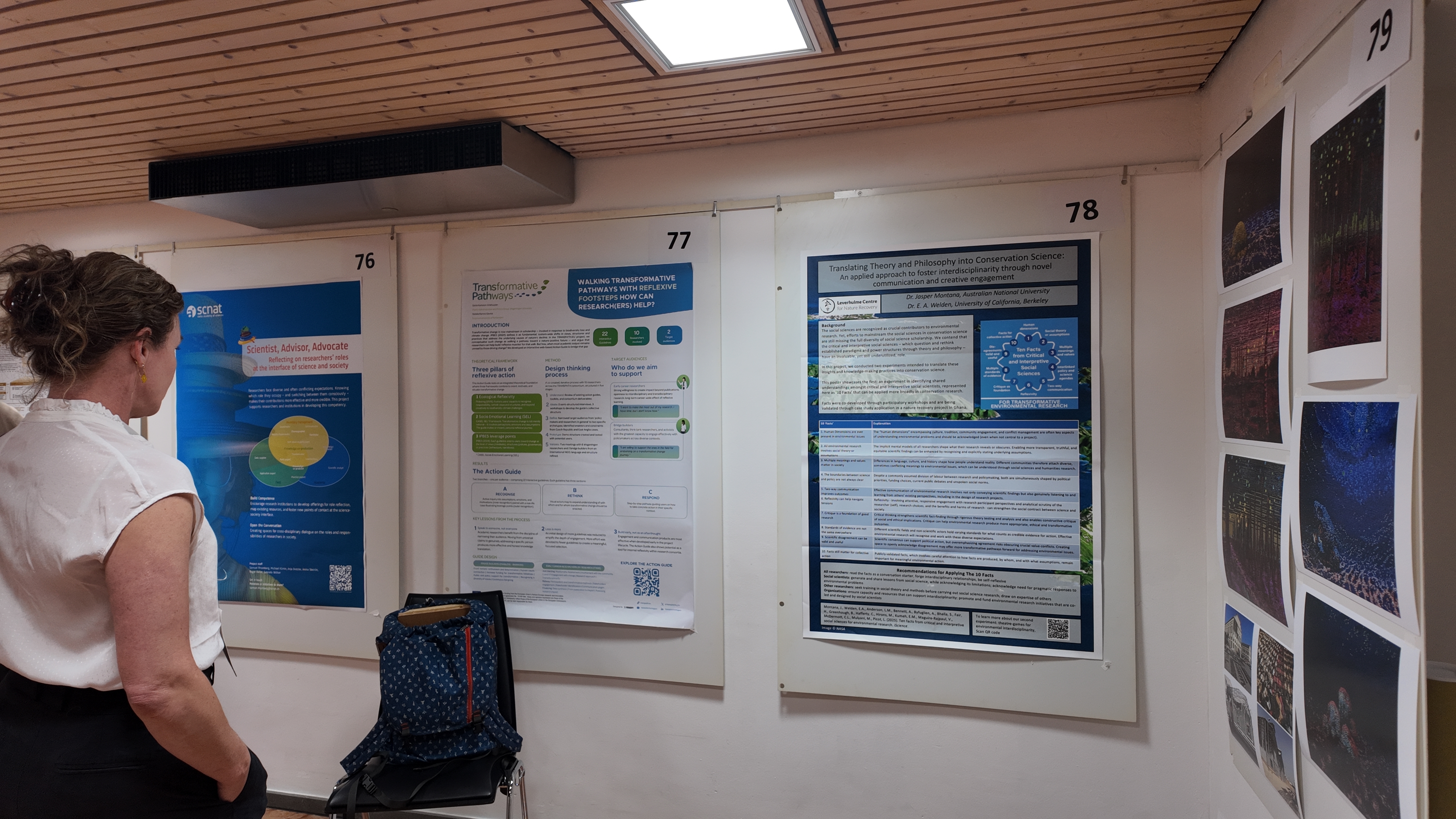
You can already explore the Action Guide here: https://transpath.eu/actionguide